TL;DR — SEO for consultants is not about ranking for "consultant". It is about being the best answer to the specific searches your buyers make: your service in your niche, and the questions they ask before they hire. Get the foundations right, build a page for each service and niche, publish genuinely useful articles, and earn mentions from credible sites.
Why SEO matters for consultants
Most buyers do some research before they get in touch. They search the problem they have. They search for someone who solves it. They look you up after someone mentions your name. If you are not there, someone else is.
SEO is also the one channel that keeps working while you are busy with client work. A page that ranks brings enquiries month after month, without you posting, calling or emailing anyone.
And it now feeds AI answers too. When buyers ask ChatGPT, Gemini, Claude or Perplexity who can help, those tools lean on the same web content search engines use. Good SEO is the foundation of GEO.
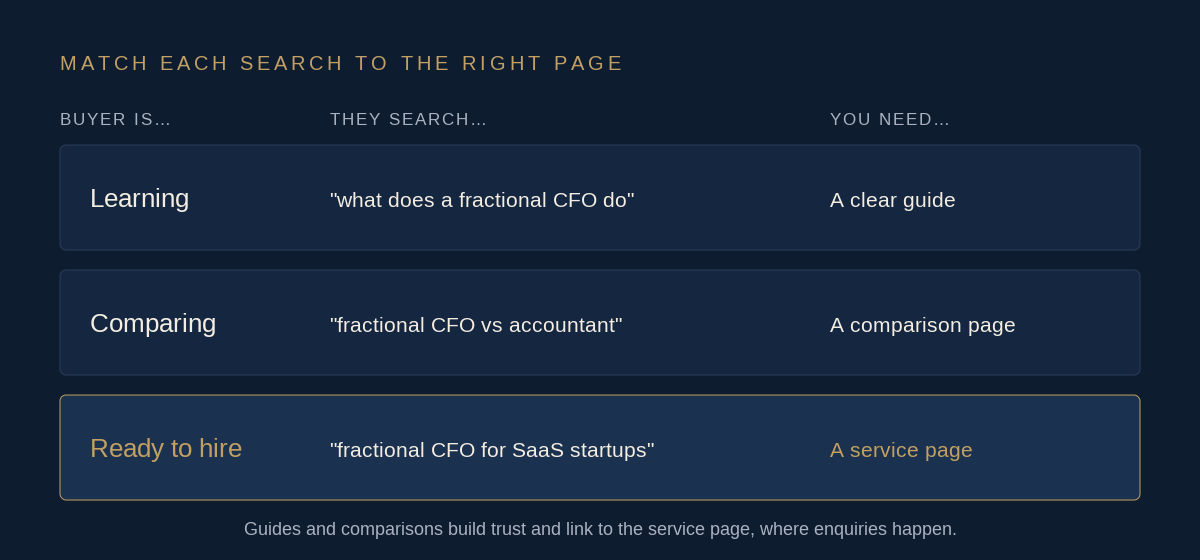
Step 1: Pick the searches worth winning
Do not chase broad terms like "business consultant". They are dominated by directories and huge firms, and the people searching them are rarely buyers.
Target three kinds of search instead:
- Service plus niche: "fractional CMO for SaaS", "IT consultant for law firms", "AI automation consultant for accountants"
- Service plus location: "financial consultant Dubai", "marketing consultant Manchester"
- Buyer questions: "how to prepare for due diligence", "do I need a fractional CFO", "how to choose an AI consultant"
The more specific the search, the easier it is to rank and the more likely the searcher is a buyer. Our guide to keyword research for consultants walks through how to find them.
Step 2: Fix the foundations
Before content can rank, search engines need to be able to crawl, understand and trust your site:
- Fast pages that work well on mobile
- A clear page title and description on every page
- A sitemap submitted in Google Search Console
- Structured data that tells Google who you are and what you offer
- No broken links, duplicate pages or indexing errors
Our consultant website SEO checklist covers each one.
Step 3: Build pages around services and niches
One "Services" page listing everything you do will not rank for much. Build a dedicated page for each core service, and where it makes sense, for each niche you serve.
Each page should answer the buyer's questions directly: what the service is, who it is for, what is included, how it works, what it costs or how pricing works, and what results look like. Add an FAQ section with the real questions buyers ask on calls.
Step 4: Publish genuinely useful articles
Articles catch buyers earlier, while they are still researching the problem. Write about:
- The questions clients ask you on every first call
- Mistakes you see your buyers make
- How you approach a common problem, step by step
- Comparisons buyers make, such as hiring in-house versus a consultant
Write from real experience. Specific examples, opinions and frameworks from your client work are what make content rank and get cited, and they are the one thing generic AI-written content cannot copy.
Step 5: Earn authority
Search engines and AI tools trust sites that other credible sites mention. For consultants, the best sources are:
- Podcast appearances, with a link in the show notes
- Guest articles for industry publications
- Listings on reputable directories and associations
- Being quoted in articles about your field
More in our guide to backlinks for consultants.
Step 6: Measure what matters
Track rankings and traffic, but judge SEO by enquiries. Search Console shows which searches bring people to your site. Your contact form and calendar show whether those people become conversations. A page that brings ten of the right buyers beats one that brings a thousand of the wrong ones.
The bottom line
SEO rewards consultants who are specific, helpful and consistent. Pick the searches your buyers make, build pages that answer them better than anyone else, and earn a few good mentions. It takes months, and then it keeps paying back for years.
If you would rather hand it off, Kräfte's SEO and GEO for consultants covers technical SEO, content, AI visibility and backlinks on one fixed monthly retainer.